What I look for Hiring Interns And Graduates
Chatbot & AI Meetup, Dublin, 20th January 2026
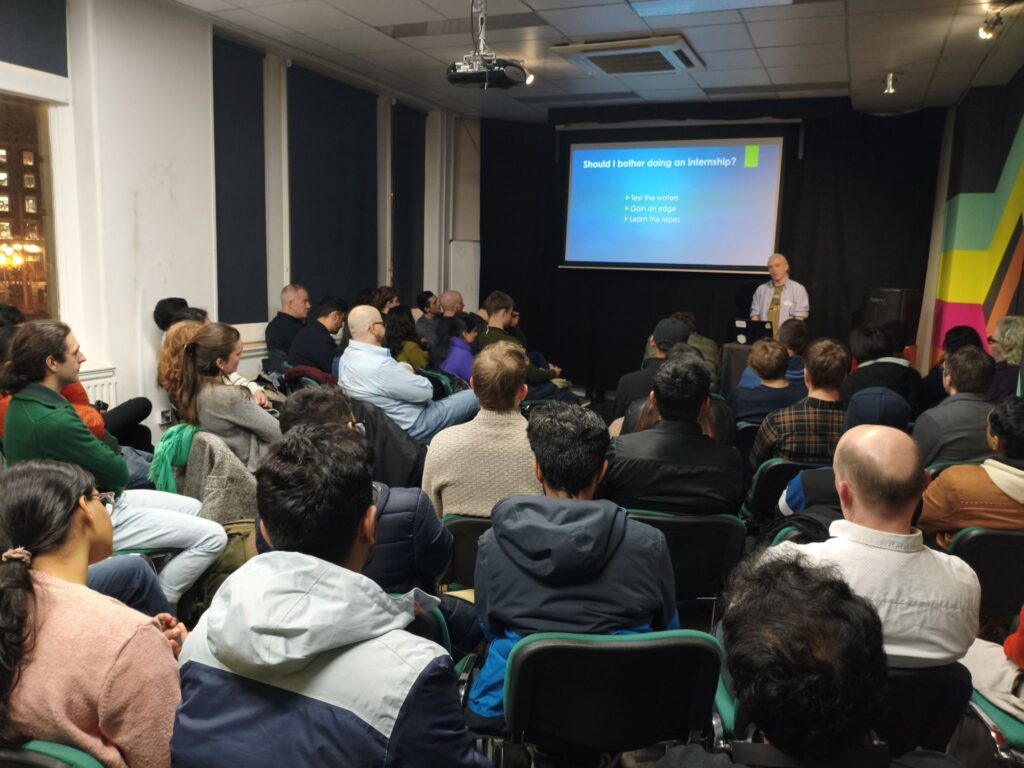
With many attendees still at university, I shared what I’ve looked for when hiring interns and graduates, beyond technical skills. What stands out most to me is the initiative people take outside their course, perhaps personal projects, how well they communicate and collaborate, how quickly they can learn, and, most importantly, their approach to problem-solving.
Summits on the Air
GI-QRP Meeting, Craigavon, 2022
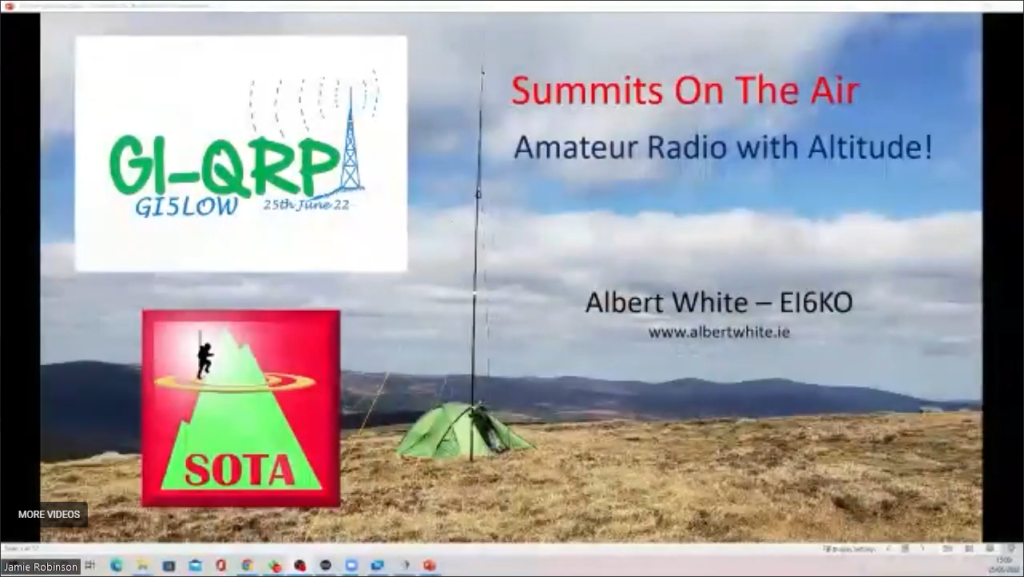
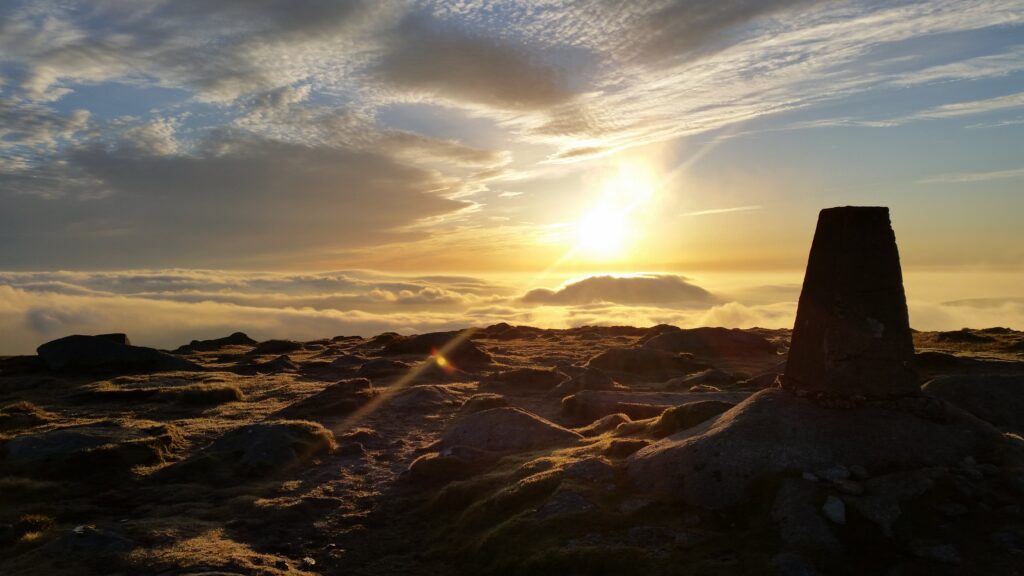
The G-QRP convention asked me to speak about Summits on the Air and using QRP equipment. I covered what summits caount for SOTA, a bit about the program, spoke about typical equipment and strategies for successful activations.
Introduction to Pandas
Oracle & Local Computer Group, 2020
I gave a talk covering the fundamentals of using the Pandas library in Python for data analysis and manipulation. The session introduced core concepts such as DataFrames and Series, demonstrated how to load, explore, filter, and transform data, and showed practical examples of using Pandas to clean and analyse real-world datasets. The talk was aimed at beginners and those looking to build a solid foundation for data analysis in Python. https://github.com/albertw/pandas-toi/blob/master/Pandas%20TOI.ipynb
Kepler – Finding Exoplanets
Cosmos Star Party, Tullamore, 2013
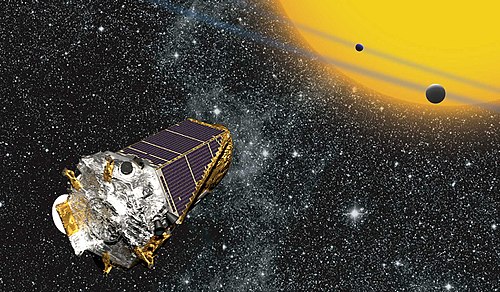
Finding planets like our own elsewhere in the Galaxy is the first step to answering the age-old question of whether we are alone in the Universe. Unfortunately, it’s very hard to see planets around other stars because the glare from the starshine overpowers the faint planets. Kepler is NASA’s first mission capable of finding Earth sized planets in orbit around stars other than our own. Instead of trying to see the planets directly, it measures the change in brightness when a planet passes in front a star and blocks a tiny fraction of the starlight. It is very rare for a planet to line up just right to pass in front of the star as seen from the spacecraft, so Kepler will stare at over 150,000 stars almost continuously for 5-6 years to capture these rare events. I talked a little about the spacecraft, how we find planets, and present some of recent exciting planet discoveries. With a lot of thanks to Fergal Mulally!